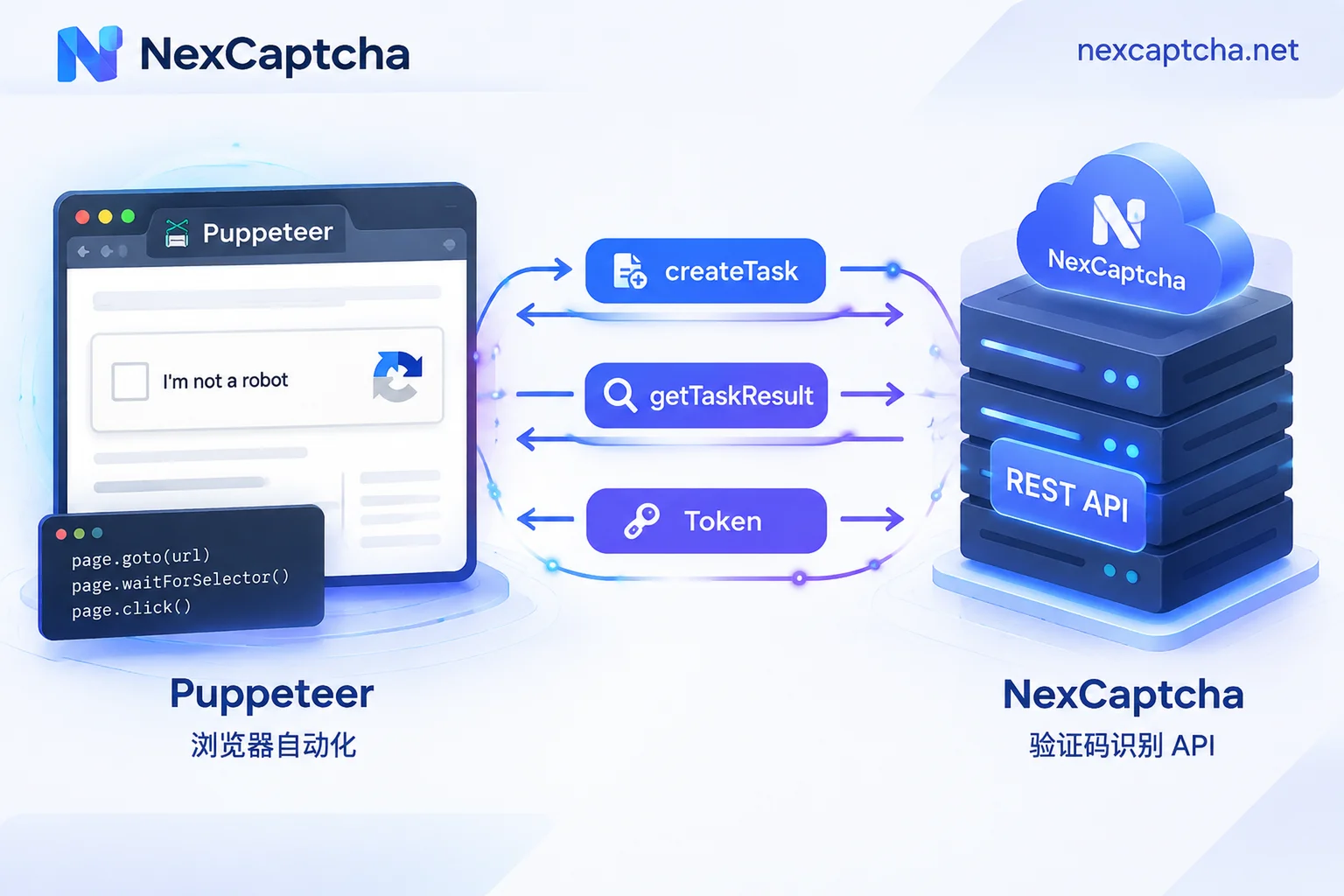
How to Integrate a Puppeteer CAPTCHA API: From Parameter Extraction and Token Injection to Troubleshooting Target Site Rejection
A complete guide to integrating a CAPTCHA recognition REST API with Puppeteer: dynamically extract parameters like sitekey, create tasks and poll results, inject tokens into the DOM via page.evaluate and trigger frontend callbacks, and troubleshoot the four common reasons a target site still rejects a returned token—expiry, callback not fired, IP mismatch, and automation fingerprint.
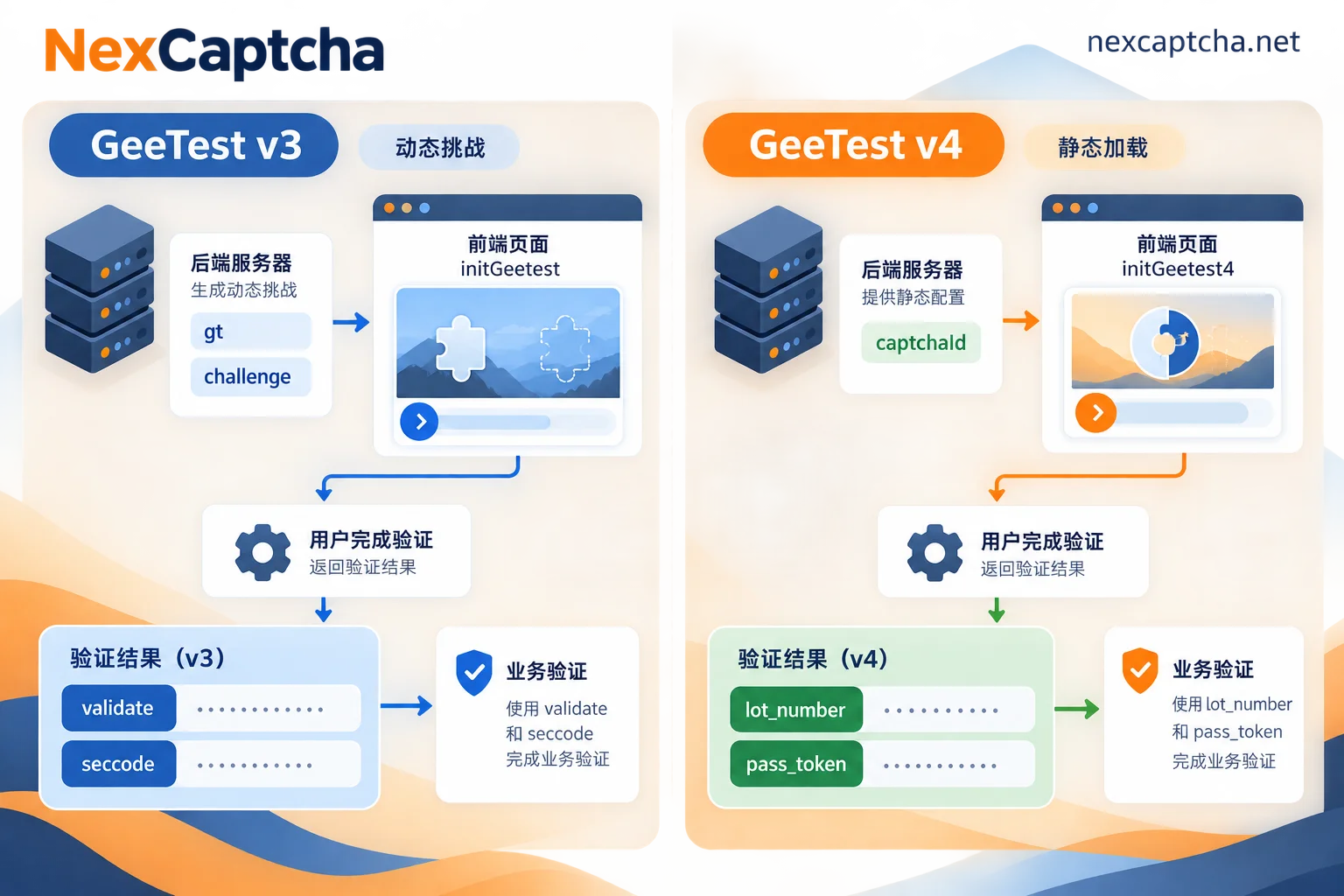
GeeTest v3 vs v4: Differences in Initialization, Parameters, Secondary Validation, and Automation Integration Architecture
GeeTest v3 and v4 are two independent architectures: v3 requires server-generated dynamic challenge, client initialization with gt and challenge, and returns validate and seccode; v4 removes request stickiness, uses static captcha_id, introduces adaptive verification, and returns lot_number, pass_token, captcha_output, and gen_time, with server-side HMAC-SHA256 validation.
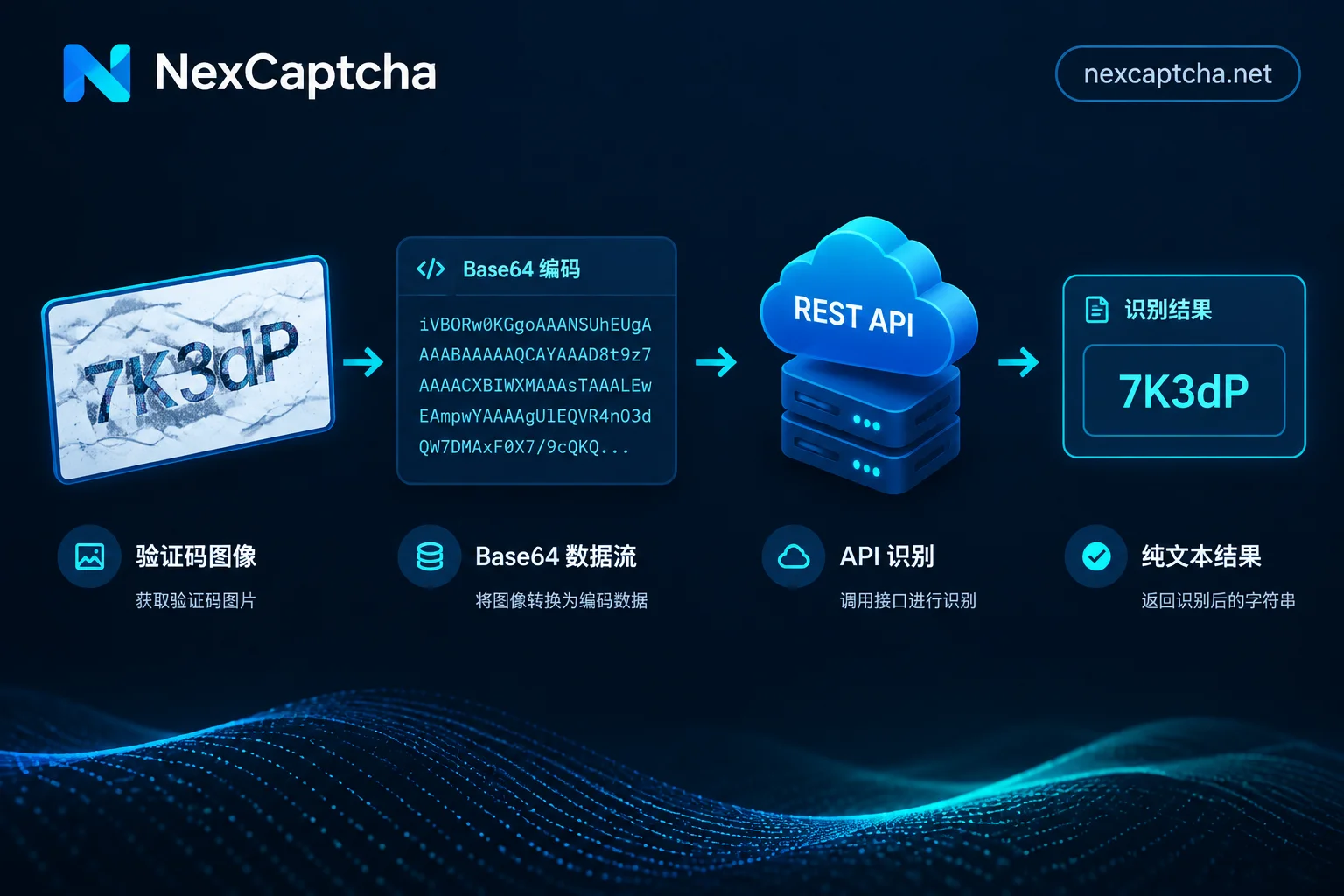
How to Integrate an Image CAPTCHA Recognition API: Base64 Standards, Parameter Configuration, and Session Persistence
The image CAPTCHA recognition API converts traditional character and math CAPTCHA images into text via a REST interface. Integration requires handling Base64 encoding standards, configuring tuning parameters like case/numeric/math, understanding the createTask workflow, and most critically, maintaining session consistency in automated scenarios such as Playwright/Selenium to avoid CAPTCHA-session mismatch and business failures.
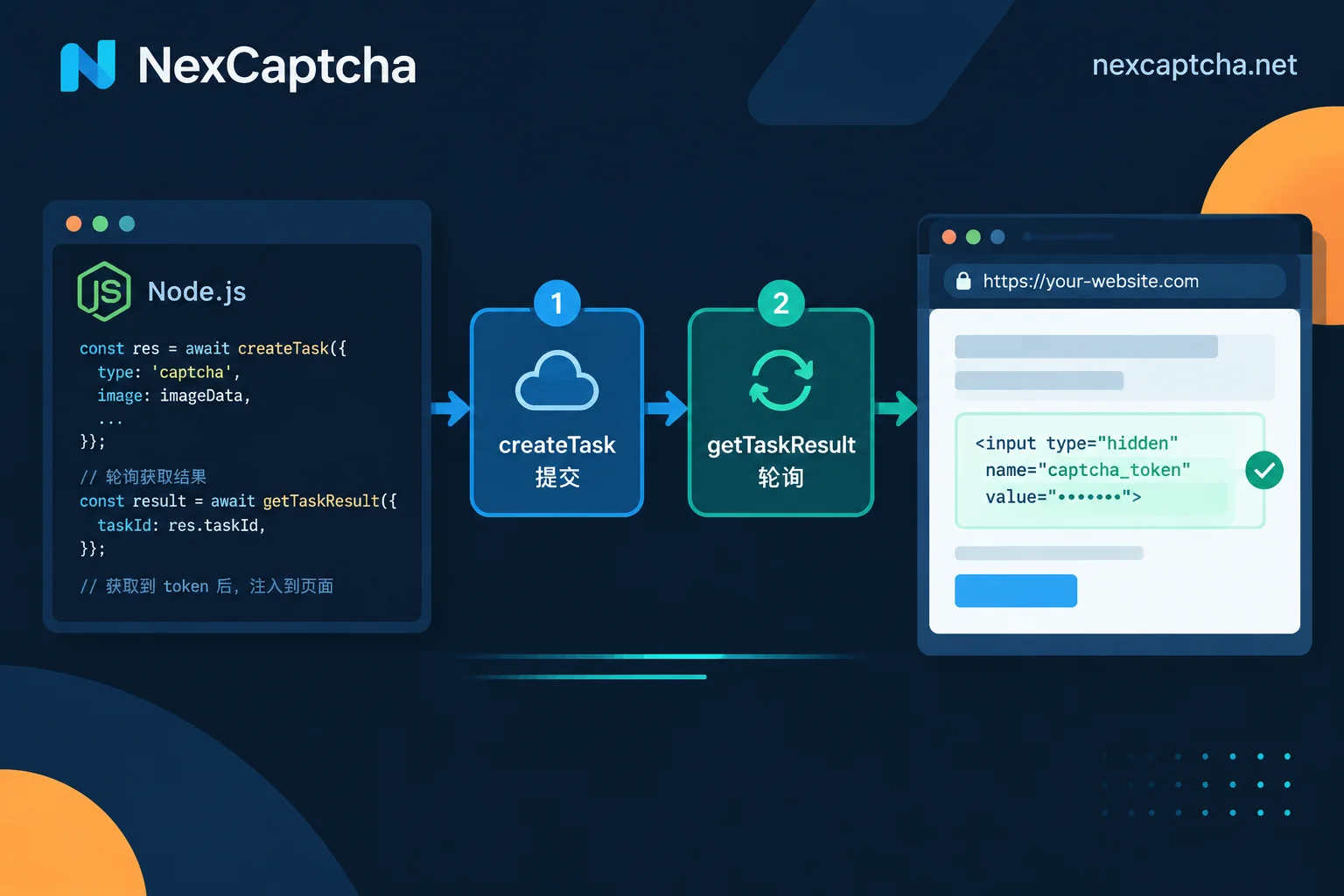
Integrating a CAPTCHA Solving API in Node.js: Task Submission, Polling, Error Handling, and Result Injection
A practical guide for Node.js developers on the two-stage CAPTCHA solving REST API flow: constructing requests for image and token tasks, polling with timeout and backoff, classifying errors, and injecting results into Playwright/Puppeteer pages for a complete loop.
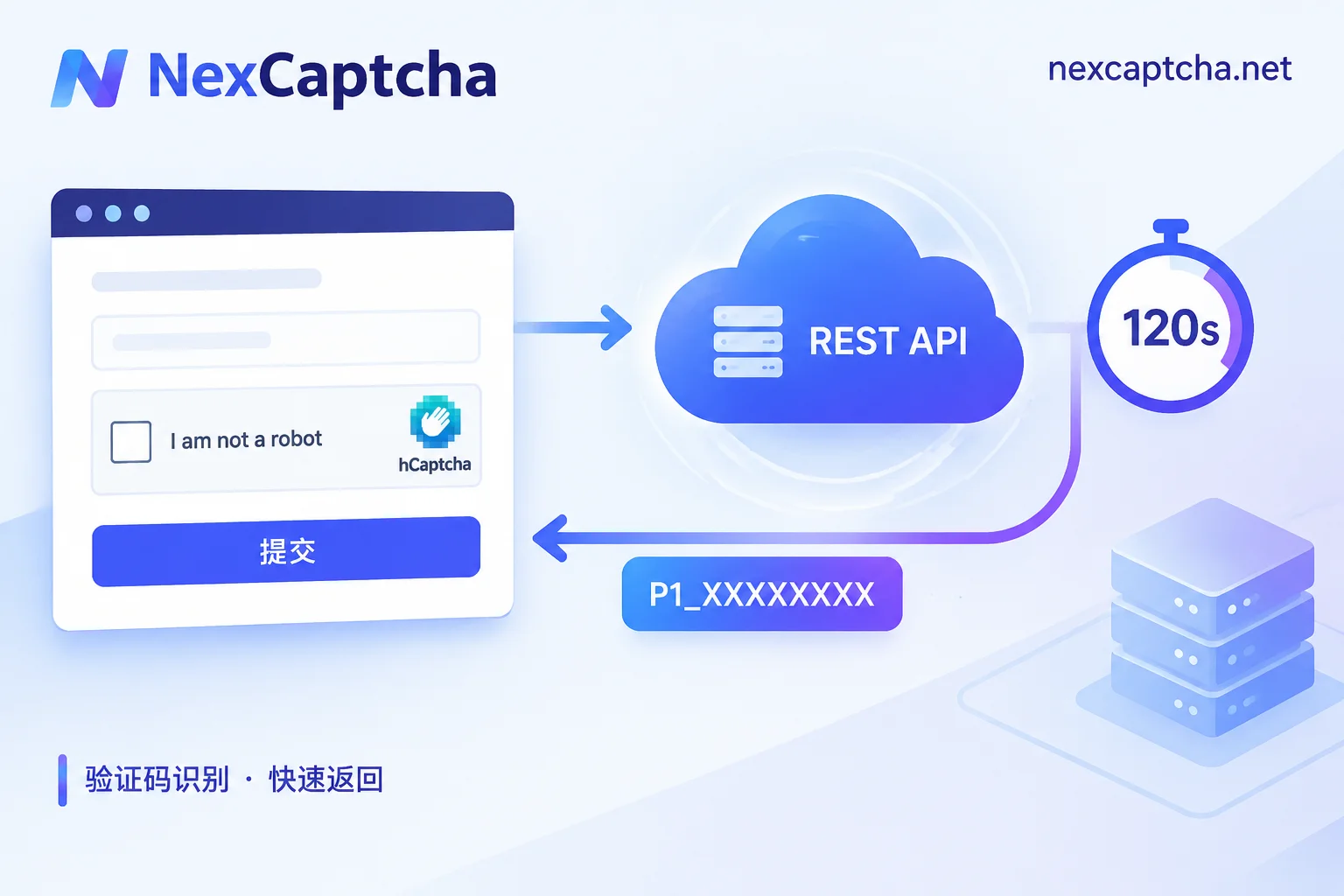
How to Integrate an hCaptcha Solving API: Parameters, Task Flow, Token Injection, and Rejection Troubleshooting
Explains how an hCaptcha solving API works: what parameters to prepare before submitting tasks, how to handle Enterprise rqdata, how to complete polling or callback within the ~120-second validity window, and how to inject tokens and trigger data-callback in Playwright, Puppeteer, or Selenium, plus the troubleshooting order when the service returns a token but the target site rejects it.