
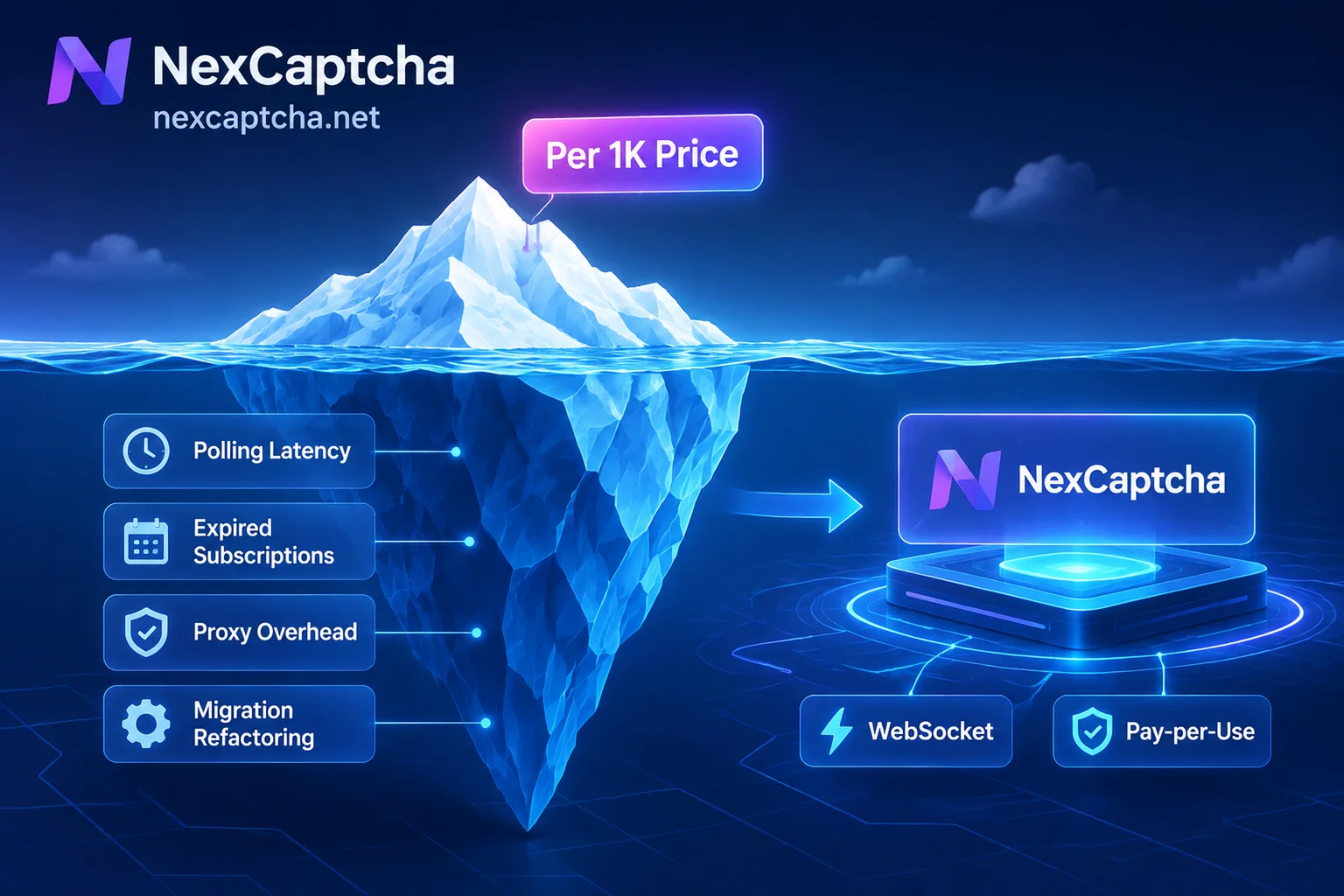
Captcha Solving Platform Cost Comparison: Beyond the 'Price per 1,000' Trap, a Total Cost of Ownership (TCO) Guide for Enterprise Procurement and Migr
When comparing captcha platform costs, many teams only focus on the published price per 1,000 calls, only to find their actual monthly bills far exceed the budget after going live. This article, from the perspective of enterprise procurement and technical architecture, goes beyond simple price comparisons and breaks down five hidden costs: idle monthly subscriptions, polling overhead, proxy and session misalignment, multi-platform order splitting, and code migration and refactoring. It also provides a practical dual-run stress testing and TCO calculation framework.
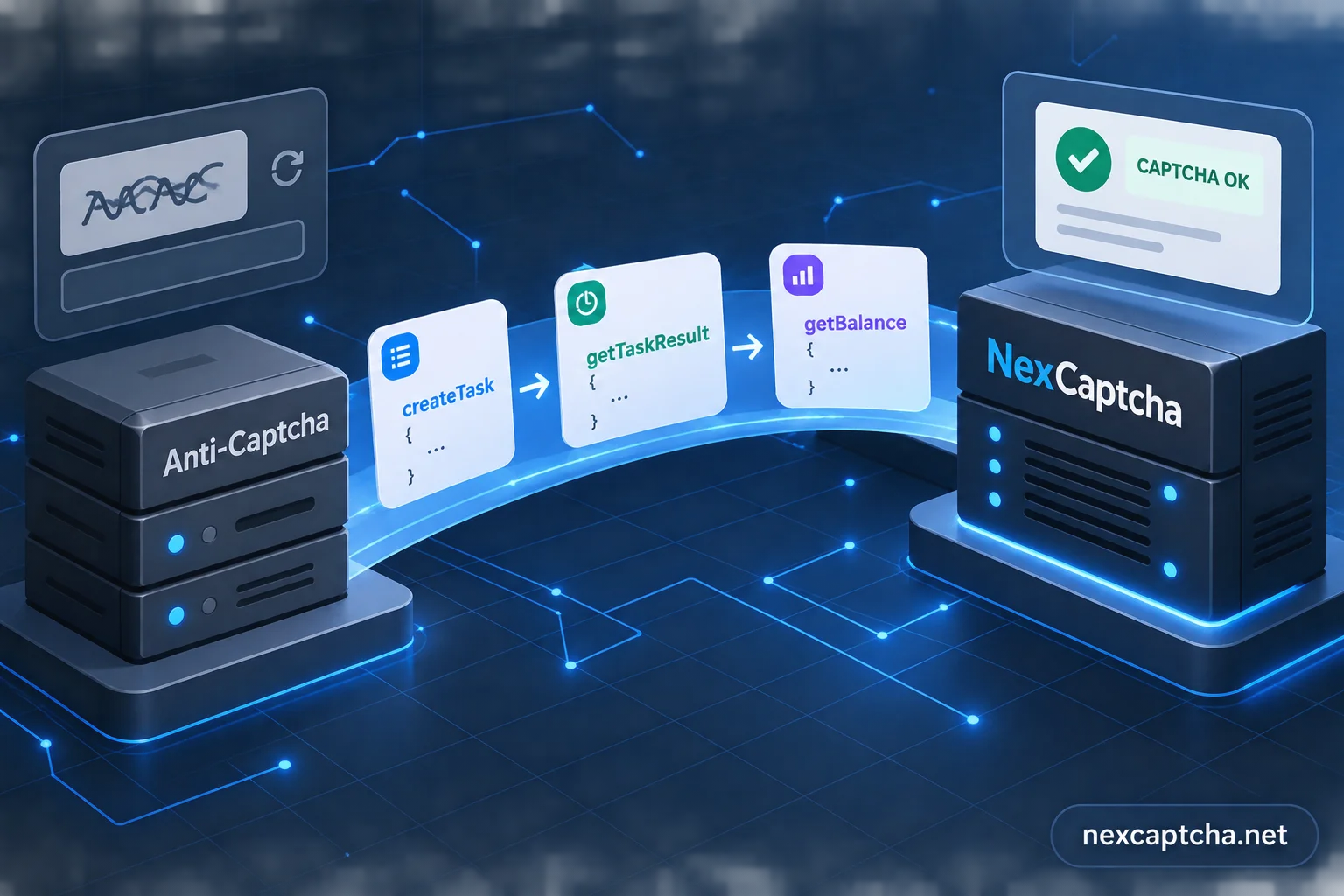
How to Migrate from Anti-Captcha: Task Inventory, API Mapping, Error Code Rewrite, and Canary Rollout
Migrating from Anti-Captcha to a compatible captcha-solving API like NexCaptcha involves more than changing the domain. This guide outlines the practical order: inventory your task types and fields, build an adapter layer, verify protocol and parameters, rewrite error handling, align cost metrics, and finally use request-level canary comparison to ramp up gradually while keeping a fallback.
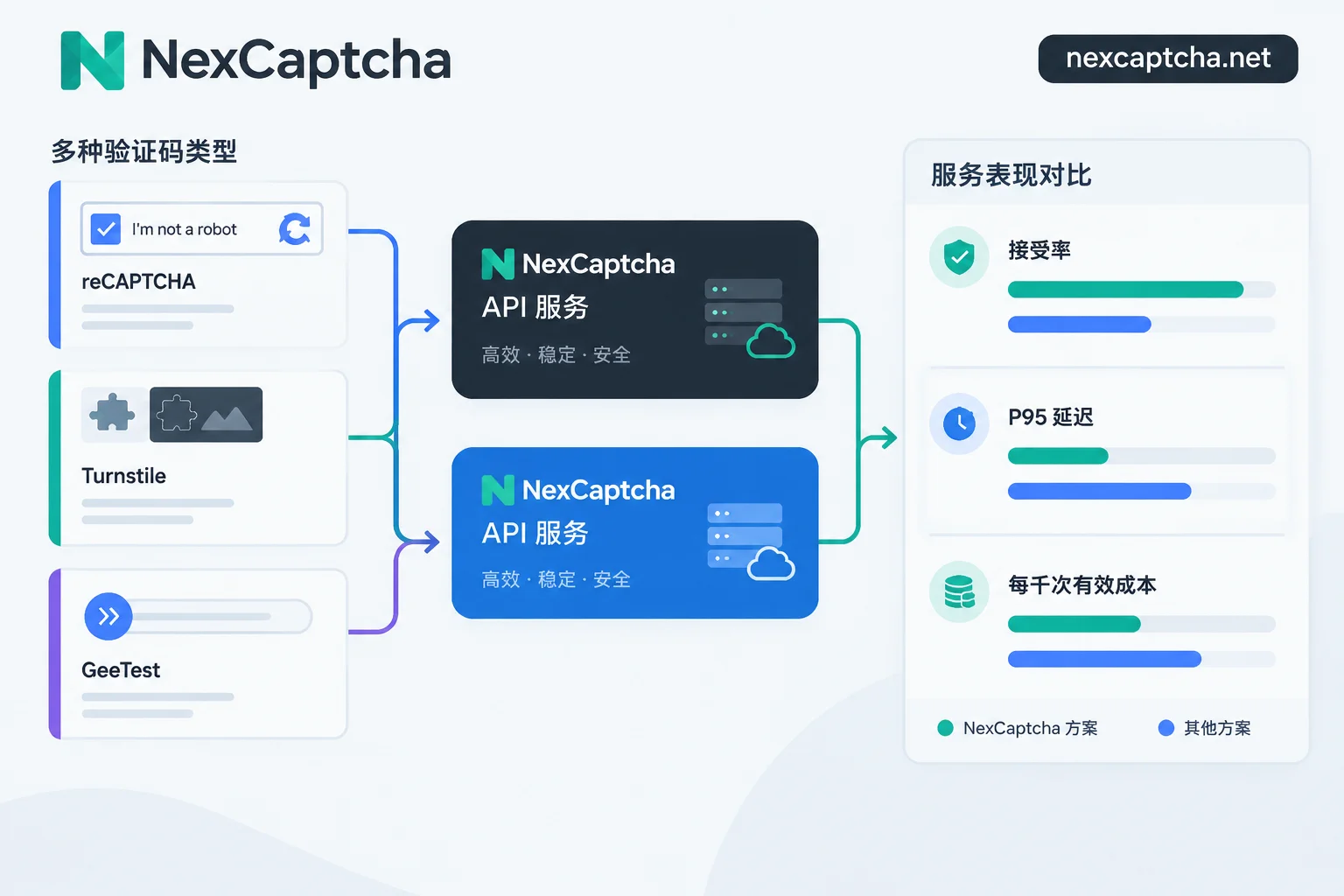
How to Choose a CapSolver Alternative: Task Inventory, Effective Cost Comparison, and Small-Traffic Migration Steps
When replacing CapSolver, first determine whether the problem lies in the platform or in your own session and proxy, then inventory by task type. This article compares three alternative approaches—AI with human fallback, pure automation, and multi-protocol compatibility—and provides a formula for 'cost per thousand business-accepted requests,' a migration field checklist, and a 5%–10% small-traffic dual-run validation method.
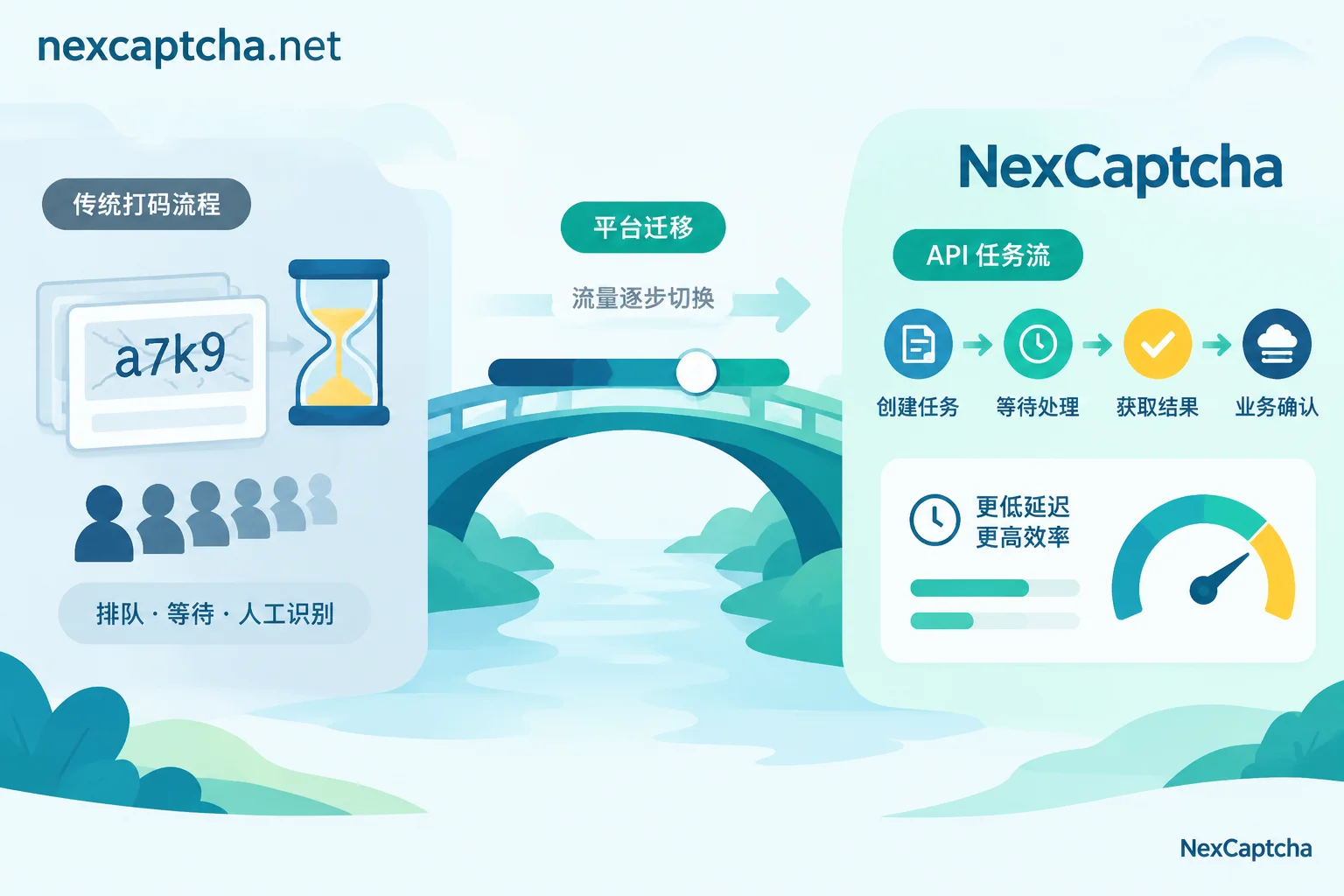
How to Choose a 2Captcha Alternative: Latency, Cost, API Differences, and Low-Risk Migration Steps
Explains when it's worth replacing 2Captcha, the main categories of alternatives, and how to select using five dimensions: latency percentiles, target site acceptance rate, API protocol, billing metrics, and type coverage. It provides a cost-per-thousand-successful-solves formula and a step-by-step canary migration method to reduce switching risk.