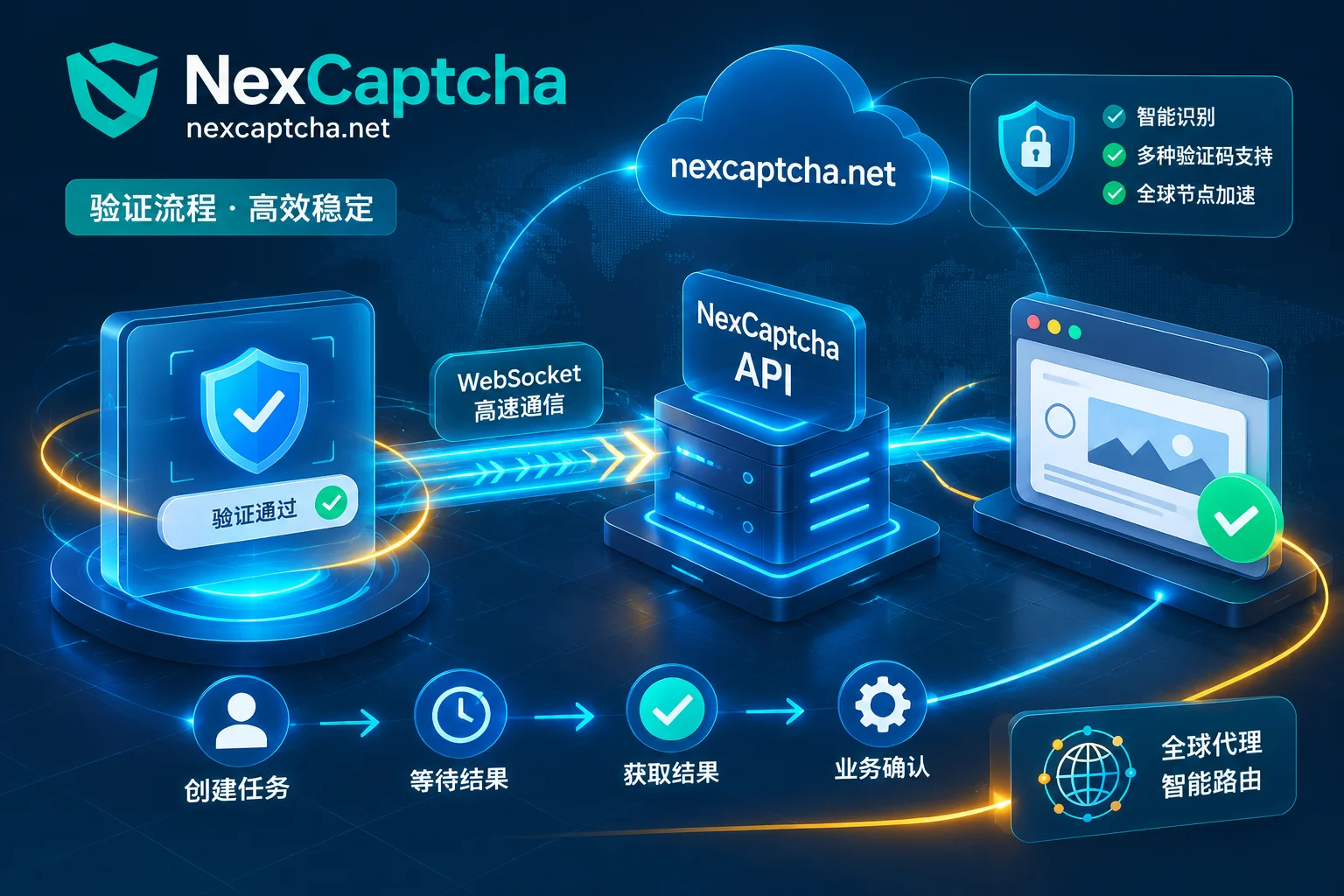
In today's data-driven decision-making, SEO ranking monitoring, real-time price comparison, and automated tasks for AI Agents have become essential for enterprises. However, with the continuous evolution of security protection technologies such as Cloudflare Turnstile, DataDome, and AWS WAF, simple image recognition (OCR) has long been unable to cope with complex verification logic.
Why is "traditional CAPTCHA solving" slowing down?
Recently, discussions in developer communities about "high-frequency CAPTCHA failures" have remained heated. Many enterprises have found that even when using traditional OCR platforms, they often face the following dilemmas:
- Token validation failure: Target sites not only require recognizing images but also require submitting real-time generated session tokens. Simply parsing image coordinates can no longer pass validation.
- Dynamic risk control interception: With the proliferation of AI Agents, target sites are increasingly strict in detecting browser environments and behavioral trajectories. Simple injection no longer works.
- High-frequency concurrency limitations: Due to interface compatibility and response latency issues, in large-scale data collection scenarios, queuing is severe, directly dragging down business processes.
Shifting from OCR to Token-level recognition
Facing this escalation of confrontation, modern automation architectures must transition from "passive recognition" to "seamless integration." NexCaptcha's core idea is to provide an automated CAPTCHA solving interface that, through asynchronous processing, directly returns the token or cookie required for verification. Developers only need to submit it within their own session environment, without worrying about the underlying parsing path.
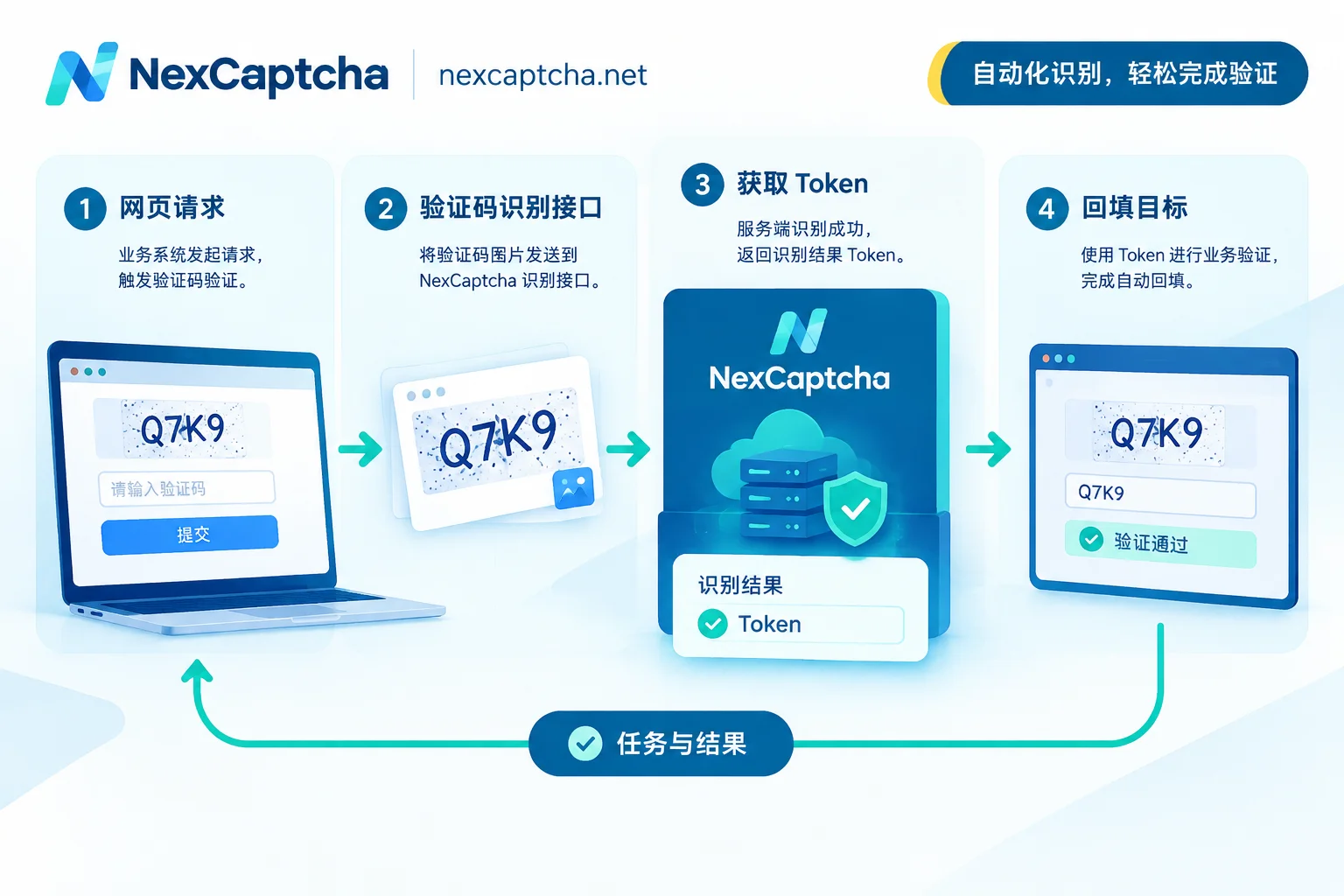
This approach not only solves the response speed issue under high concurrency but also reduces the risk of its own IP being associated with risk control by the target site through a proxy pool strategy independent of the customer's environment.
Building a sustainable collection architecture
Many technical leaders often ask: how to smoothly migrate existing CAPTCHA solving services?
- Layered interface design: NexCaptcha's documentation fully follows the modern OpenAPI specification and supports integration through a standardized chain of creating tasks (create.cgi) and querying tasks (query.cgi).
- AI assistant integration (MCP): For teams deeply using AI Agents, we provide a hosted MCP service that requires no local deployment and uses API Key authentication directly, supporting configuration in mainstream environments such as Claude, Cursor, and VS Code, enabling your AI agent to solve CAPTCHAs autonomously.
- Pay-per-use and elastic scaling: No complex subscription packages or minimum spending traps. Transparent pay-per-use pricing strategy with automatic refunds for failed tasks ensures every penny is spent on valid tasks.
Conclusion
Technical confrontation is a protracted battle. Rather than patching outdated OCR solutions, it's better to choose an enterprise-grade solution that supports mainstream CAPTCHA types (such as reCAPTCHA, Geetest, FunCaptcha, etc.).
If you are selecting an architecture or considering migration, we recommend first referring to our platform migration guide and validating through a small-traffic dual-run to experience more efficient collection performance. For any integration questions, feel free to consult the Telegram channel.
Note: This product is for legal browser automation, AI Agent, QA regression, and public data collection purposes only. It is prohibited for credential stuffing, bulk registration, and any illegal activities.